De

Functional and
Reliable Polymers

We develop and characterize polymer materials and components designed for functional performance, reliability, and a long service life.

Customized solutions
and services

Photochemistry and additive manufacturing

Light-induced reactions are characterized by low energy consumption, high speed and are used in a variety of industrial manufacturing processes.

The cross-linking of polymer chains or the curing of monomeric building blocks via light-induced chemical reactions produces high-performance engineering materials that are characterized by high rigidity, high temperature resistance and/or low creep. New processes are being developed at the PCCL that enable accelerated curing at lower temperatures or even room temperature. The basis for this is frontal polymerization, which is triggered by a short light or temperature pulse and proceeds autocatalytically due to the heat of reaction released. As a result, carbon fiber-reinforced components, for example, can be fully cured within a few minutes, which illustrates the potential savings in terms of energy and production costs. 

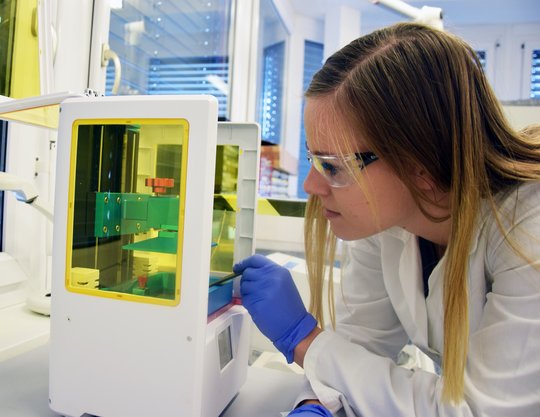
Fast cross-linking under the influence of light also plays an important role in the 3D printing of polymers that are produced using stereolithography processes. Here, the 3D object is built up point by point or layer by layer through local cross-linking/curing of a liquid resin. The PCCL has extensive expertise in adjusting the mechanical properties of photopolymers and optimizing the printing parameters. Multi-material printers are available at the PCCL, which enable the production of components with locally different properties (e.g. stiffness, electrical conductivity). In addition, by cleverly combining photoreactions, it is possible to produce components with multi-material properties using 3D printing with light sources of different colors.

Tailored surfaces and their characterization

The modification and characterization of material surfaces can look back on a long history of success at the PCCL.

The properties of surfaces and interfaces play a key role in a variety of technical processes, including bonding, coating, printing, compounding, impregnating and laminating. Chemical and plasma processes are used to specifically modify the surfaces of organic and inorganic materials and tailor them to the relevant application. Examples include the modification of fillers and fibres for better distribution and bonding in the polymer matrix, the immobilization of functional anchor groups to increase the adhesive strength of bonded joints or the targeted adjustment of the surface polarity of photopolymers for the transport of liquids in microfluidic applications. 

The PCCL also has extensive expertise in the characterization of surfaces. Sophisticated methods make it possible, for example, to detect the haptic properties of polymer materials and characterize them in a practical manner. For this purpose, a measurement setup was designed that enables the human sense of touch to be reproduced as realistically as possible. The PCCL also has a comprehensive range of measuring equipment for determining the tribological properties of polymer materials. In a large number of research projects, comprehensive expertise has been developed to determine the friction properties and assess the corresponding wear mechanisms.

Metamaterials - digital, programmable materials of the future

Material design through variation of the geometric structure

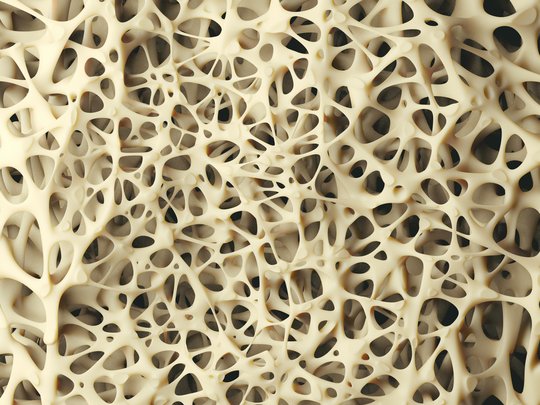
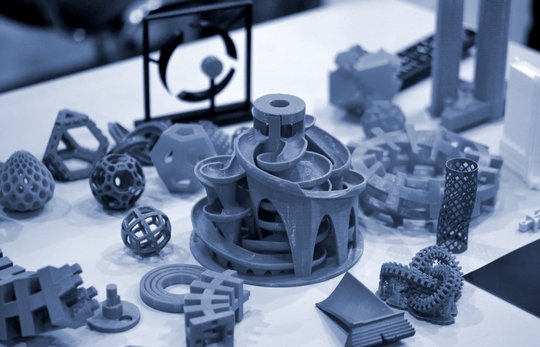
The rapid development in the field of additive manufacturing is increasingly opening up new manufacturing possibilities. Among other things, this also allows the increasing further development of so-called metamaterials, which are characterized by a cellular structure with repeating geometric unit cells. Due to the cellular structure, the geometry dominates the global and local material behavior, while the base material used only plays a subordinate role.

While a few years ago this was mainly a topic of basic research, there are increasingly promising applications for such structures. As part of the two COMET module projects “Chemitecture” (2020-2023) and “Repairtecture” (2024 - 2027), the PCCL has realized several concrete applications for mechanical metamaterials such as clutches, seals that can be adjusted during operation, modular springs with freely selectable non-linear characteristics or overload protection for surgical instruments. So-called thermal metamaterials for the targeted influencing of heat flow (e.g. for increased cooling of electronic components) are also currently developed at the PCCL and will be transferred to specific applications in the future.

Stimuli-responsive Polymersysteme

Polymers that can react to external stimuli such as temperature, pH value or light are revolutionizing classic materials and enabling new, more intelligent technologies.

Stimuli-responsive polymer systems, also known as “smart polymers”, are materials that can react specifically to external stimuli such as temperature, pH value, light, electrical or magnetic fields or mechanical stress. Their molecular structure or physical properties change in response to these stimuli, making them particularly versatile and attractive for a wide range of applications. Typical reactions include changes in shape, color changes, phase transitions or controlled release of substances. A major advantage of stimuli-responsive polymers is their high precision and efficiency: they can be activated in a targeted manner and often show fast, reversible and specific reactions that would be difficult to achieve with classical materials. They also enable multifunctional designs in which several stimuli can be processed simultaneously (multi-responsive systems). 

In areas such as biomedicine/pharmacy (e.g. for controlled drug release, tissue engineering or self-healing implants), soft robotics or self-healing/self-cleaning coatings, such materials are playing an increasingly important role. 


The PCCL is trying to revolutionize classic materials by using stimuli-responsive polymers and to enable new technologies that are more intelligent and better adaptable to individual requirements.


Polymer fibre composites

Fibre composites are established as construction materials for lightweight construction applications

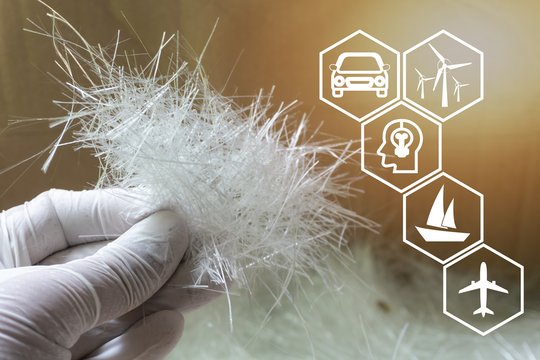
This area of expertise deals with the deformation and failure behaviour of polymer-based fibre-reinforced composites under quasi-static and impact loads. The state-of-the-art testing laboratory at the PCCL enables systematic and comprehensive material testing under complex stress conditions (e.g. temperature, media) from the test specimen to the component. In addition to the establishment of process-structure-property relationships and the further development of testing and characterisation methods, the structural integrity and durability of bonded fibre composite structures is another focus of research. The characterisation of materials is complemented by the development of new (bio-based) resin formulations that enable detachable and reusable resin and adhesive systems or contribute significantly to the rapid and energy-efficient curing of fibre composite materials. The PCCL is also researching innovative solutions for the chemical recycling of fibre composites.

Rubber characterization

PCCL has extensive experience on rubber testing and characterization for various applications, including processing simulation.

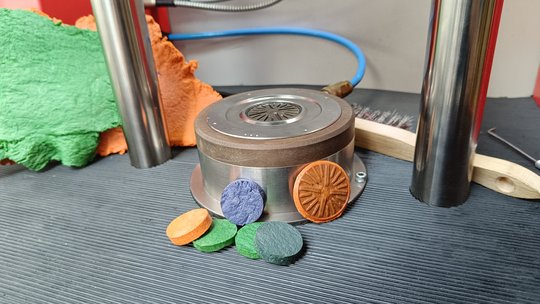
PCCL has in-depth experience in the determination of the main properties of rubber compounds. Further expertise involves the characterization of physical and mechanical properties; determination of thermal properties, including thermal conductivity and specific heat capacity; chemical characterization of rubber compound; and rheological characterization of elastomers via rotational (steady or oscillatory) or capillary methods. The extensive knowledge and experience also includes material data determination for rubber processing simulation.

The experience acquired in the last years of intense research allowed possibilities for:

  • State-of-the-art rubber characterization for rubber compound development, quality control, or for material data determination for processing simulation

  • R&D-oriented characterization of rubber samples for recipe development.


Our research group is experienced in fracture mechanics studies of rubber parts, with focus on crack propagation under cyclic loading. These studies allow the precise determination of crack growth rate and the estimation of lifetime according to a suitable model. Fracture mechanics characterization is connected to the rubber formulation and microstructure.


Material and process development for powder bed-based additive manufacturing of polymers

The further development of additive process technology for polymer materials is a long-standing research topic at the PCCL

Powder bed-based additive manufacturing is one of the three established additive manufacturing processes for polymers and is also suitable for industrial series production. As with all additive technologies and despite the already high level of development, there is a great need for development in this process in order to close the technical gaps to conventional plastics processing methods such as injection molding. 

Over the last 10 years, the PCCL has therefore built up considerable expertise in the field of polymer powders, process know-how for classic selective laser sintering and know-how in cold sintering. One issue of particular commercial relevance is powder ageing during the multi-hour printing process, which has remained unresolved for decades. Although the final solution has yet to be found, the PCCL has been able to identify the combined causes of this material ageing in several research projects and participated in various solution approaches. In this research work, we have also developed our own powder materials, with a particular focus on bio- and recyclate-based raw materials.

Fragen? Kontaktieren Sie
gerne unsere ExpertInnen.
Priv.-Doz. DI Dr. Gernot Oreski

Polymers are
key enabler

Polymers are important key enabler of innovation and play a vital role in advancing modern technologies and improving our quality of life. Their targeted and responsible use opens up a wide range of opportunities—particularly in terms of resource efficiency, energy savings, and sustainable applications.


Rather than simply replacing plastics across the board, the goal is to make the most of their strengths and continuously improve them through innovative solutions. In many applications, they offer lighter, more energy-efficient, and thus often more environmentally friendly alternatives to other materials.